
Picture: STS 2030
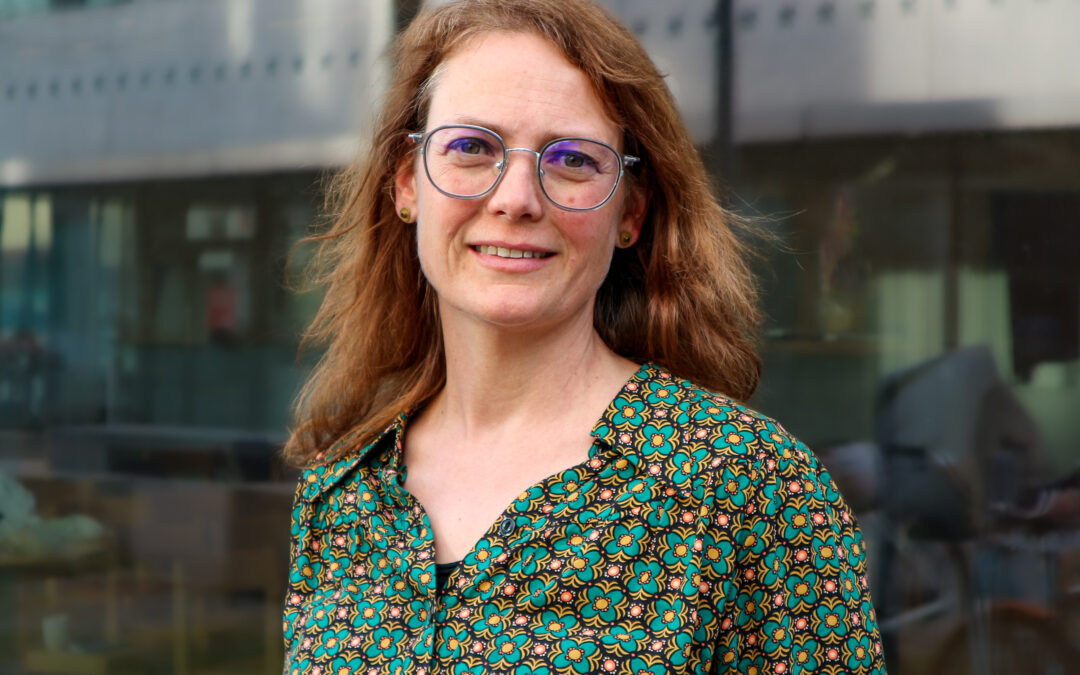
Dorothee Lötscher is the new executive director of Sustainable Textiles Switzerland. Previously, she has worked in various roles to support projects promoting sustainable value chains and market systems, helped establish a global multi-stakeholder platform, and led organizations. She is now bringing all of this experience to the Swiss textile sector.
Dorothee, you’ve worked in various countries, including Cameroon, Nepal, and Haiti. How did you end up at a Swiss textile association?
The path isn’t as long as it sounds. I’ve been fascinated by sustainable value chains from an early age—even while I was studying geography. I gained my first insight into promoting sustainable markets at the WWF. During my initial experiences in development cooperation with GIZ in Cameroon, I became acutely aware of the need for a value chain and market perspective. For this reason, I later chose the value chain approach as the topic of my master’s thesis at NADEL at ETH Zurich.
At GFRAS, from 2010 to 2014, I helped build a global multi-stakeholder platform for the first time and saw what is possible when you truly bring different sectors together. I then deepened this experience in practice at the SDC for ten years—in Haiti and Nepal and for the Horn of Africa, but also conceptually as a member of the core thematic team on economic development. Starting in 2020, I focused on corporate sustainability and completed my diploma program in Business Sustainability in 2021. Most recently, as Director of the Pakka Foundation, I drove the development of sustainable value chains for nuts and dried fruits.
Now I’m putting what I’ve learned to use in the Swiss textile industry. Here, too, it’s about who gets involved, who takes responsibility—and how to drive change across an entire industry.
Why are you involved with STS?
Textiles are everywhere in our lives. I really appreciate aesthetics and love the feel of beautiful fabrics against my skin. I enjoy working in an industry that plays a role in everyone’s daily life.
Professionally, I find it fascinating to understand the perspectives of different stakeholders and bring them together to find common solutions, to grasp the broader context of an industry, and to prioritize the relevant challenges. Throughout my career, I have had the opportunity to engage with these issues both conceptually and practically, and I look forward to drawing on my expertise in my new role.
Ultimately, the role of Executive Director gives me the opportunity to build an organization, ensure its strong presence across various sectors, and place its members at the heart of our work. This is a challenging task, and I approach it with respect. At the same time, I take great joy in creating something new, shaping the future, and tackling new challenges. I look forward to the day, in a few years, when we can look back together on what we’ve achieved and take pride in what we’ve built.
Where do you see the greatest potential for STS?
The textile sector needs an organization that works together to address key issues such as fair wages, climate change, the circular economy, and transparency. That is exactly what STS is: an association in which members from the business community, civil society, and the public sector are committed to sustainability.
In my view, the greatest potential lies in the members themselves. They bring expertise, technical capabilities, and a spirit of innovation to the table. A concrete example is the development of a circular textile sector: this can only succeed if a wide variety of stakeholders work together to develop new solutions. STS can create exactly this kind of framework, pool resources, and facilitate collaboration. This is significant from both an environmental and an economic perspective.
A warm welcome, Dorothee!